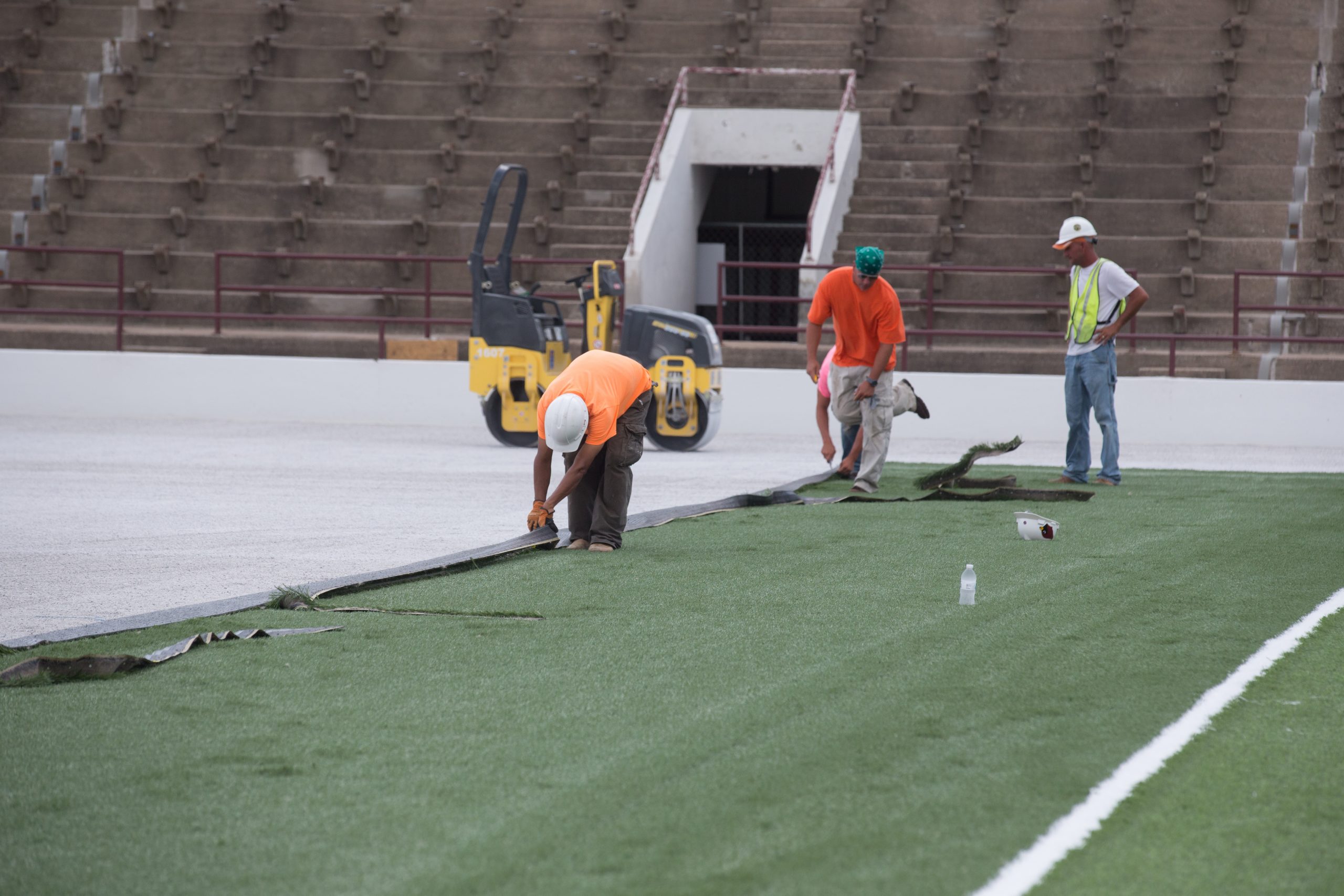
Athletic Field Artificial Turf Installation in Katy, Texas is often selected when property owners want cleaner visual consistency, stronger drainage performance, and fewer recurring maintenance tasks than natural lawn systems can usually provide. In this market, many projects involve active outdoor zones that see daily movement from residents, visitors, pets, or staff. That repeated activity can create wear patterns on natural grass and make it harder to maintain an even surface. This service addresses those challenges by building a prepared base and turf system designed for dependable use through changing weather conditions.
The first stage is a practical field review. We document dimensions, edge conditions, grade behavior, and existing access points so installation planning can reflect real site constraints. This review is not a quick visual scan. It is a structured step that informs material planning, seam direction, infill selection, and drainage strategy. By documenting these details early, the project scope can be defined with fewer assumptions and better schedule control.
Preparation work is central to long term turf performance. Existing surface materials are removed where required, base layers are compacted to a stable condition, and water movement is tested so runoff can pass through the system without repeated pooling. When grade transitions or perimeter details are complex, installation sequencing is adjusted so each section is completed to the same finish standard. This approach supports consistent surface behavior across both open areas and tight edge zones.
Installation then moves to precision layout, seam joining, edge anchoring, and infill distribution. Every step is reviewed for alignment and finish quality. Turf panels are trimmed and secured around hardscape, fences, and planting areas so the final result looks clean from multiple viewpoints. Infill is applied evenly to support blade structure and improve daily usability under foot traffic. Final grooming aligns the system for appearance and consistent interaction.
One reason this service is frequently requested in Katy is the reduction in routine upkeep workload. Natural lawns often require repeated mowing, patching, edging, and seasonal correction. A properly installed synthetic system shifts that workload toward simpler care such as debris removal, periodic brushing, and occasional spot cleaning. The change is useful for households and facilities that need predictable outdoor presentation without scheduling frequent turf repair cycles.
Planning clarity is another advantage. Scope, sequencing, and installation constraints are discussed before work starts, which helps property owners compare options and set realistic expectations. If site conditions change during preparation, adjustments are communicated quickly so decisions can be made with current field information. This keeps project momentum steady while protecting finish quality.
Projects in Katy also benefit from coordinated local service coverage. Work can be scheduled for primary properties and nearby areas using the same planning framework, which supports consistency across multiple locations. Whether the request involves a single yard, a pet zone, a frontage update, or a mixed-use outdoor layout, the goal is the same: deliver a durable turf surface that remains practical, organized, and ready for regular use.